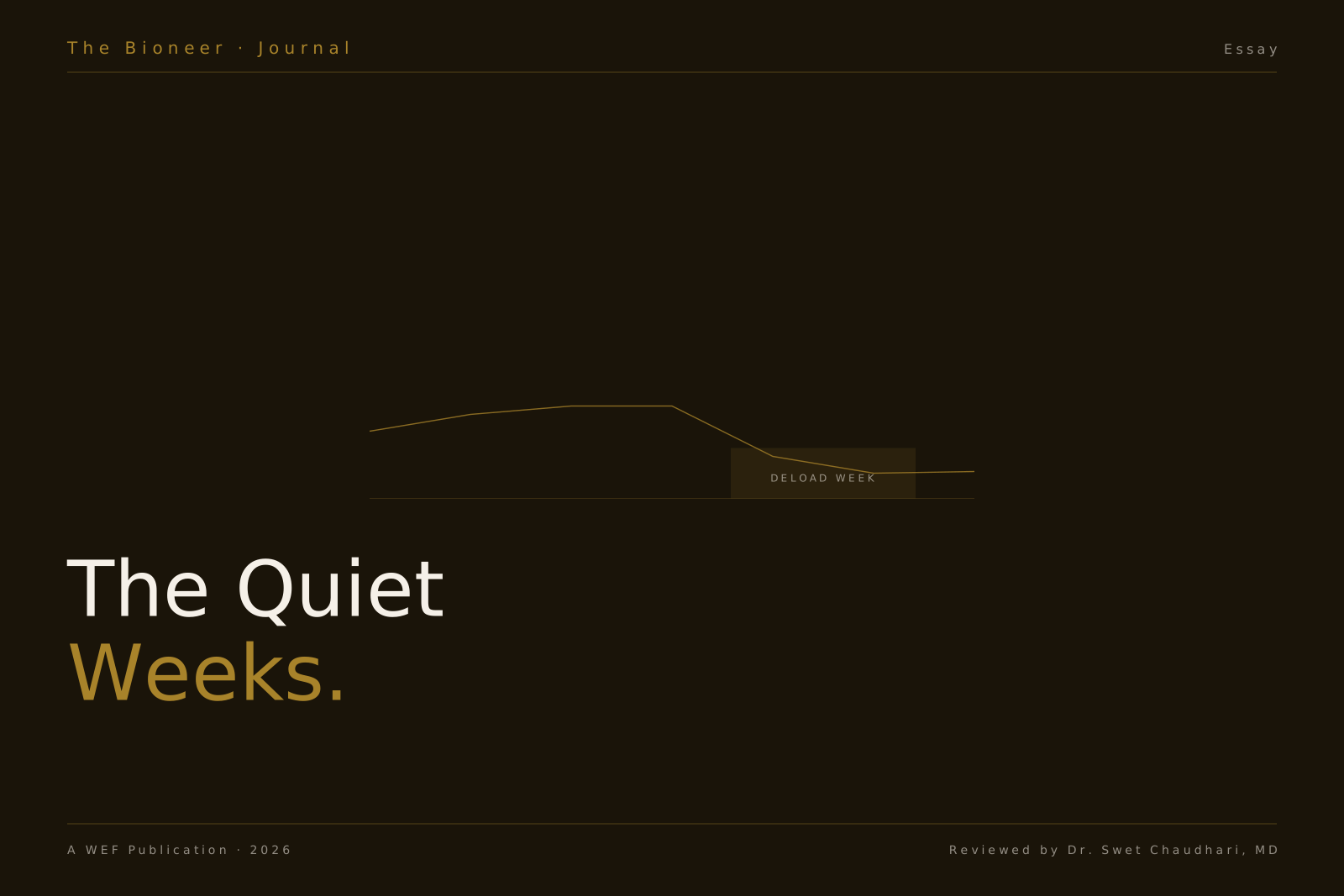
Every serious training block ends the same way, or it should. The plates come down. The sets come off. For seven days you are asked to do less than you think you can, and to do it on purpose. This is the part of the program most people skip. It is also the part where the program actually works.
Most of us were taught, somewhere along the way, that training is the adaptation — that the lift is the moment the body changes. It is a tidy story, and it is wrong in the way most tidy stories are wrong. Training is the stimulus. It is the question the body is asked. The answer arrives later, in quieter rooms — in sleep, in the slow plumbing of protein synthesis, in a tendon rearranging its collagen at a pace indifferent to your calendar.
The deload week is where the answer gets written down.
What the body is doing while you rest
The physiology is not mysterious, only unhurried. Training produces fatigue on two timelines at once: the obvious one in the muscle, and a second, slower one in the central nervous system and connective tissue. Muscle can often be ready again in seventy-two hours. Tendon remodeling is measured in weeks. The CNS keeps its own books. When load is reduced but movement is maintained — the classic shape of a deload — the faster systems finish catching up while the slower ones, for the first time in a month, are allowed to. What sports science calls supercompensation is just this: a body given enough quiet to consolidate what it was asked to become.
None of this is a break. It is the part of the work that cannot be rushed.
The resistance, named
The resistance to the deload is real, and it is almost always the same shape. You have been progressing. The numbers have been moving. A week of reduced load feels like stepping off a moving train — as though the gains will keep going without you, and you will have to sprint to catch up. Every serious lifter has felt this. Many have trained through it, chasing one more week, and then one more, until the body finally files its complaint in a language that cannot be ignored: a stalled lift, a sore joint, a flat morning that does not lift by the third coffee.
The reframe is small and it is everything. The deload is not time away from the adaptation. It is the adaptation, in its final and most fragile stage. To skip it is not to train harder. It is to interrupt your own body mid-sentence.
How you know it is time
The signals are quiet before they are loud. Morning heart rate drifts three or four beats higher than your baseline and stays there. Sleep gets shallower in a way the watch notices before you do. Grip feels a little further away on the second warm-up set. Mood flattens. Appetite goes strange. And underneath all of it, the tell that serious lifters learn to respect: the thought just one more week arriving a little too insistently, a little too often.
Four to eight weeks is the usual rhythm. Some blocks ask for it sooner. The body, if you have trained long enough to hear it, will tell you which.
The shape of the week
A deload is not a vacation and it is not a test. Movement is maintained. Load is reduced — often to around half of working weight — and volume is cut meaningfully. Sleep is protected. Protein stays in. Walking, sauna, unhurried mobility, a long dinner, a book. The week is designed to be unremarkable. That is the point. Remarkable weeks are for the block that comes next.
Closing
At Wellness Elite Fitness, the deload is written into the program the same way the heavy weeks are. The Panatta and Watson platforms are racked for lighter work. The recovery stack — sauna, cold, the quiet hour in the lounge — is not an accessory to the training week. It is the training week, in a different key. This is what it looks like to take consolidation seriously as a category of work.
You are the kind of person who takes the quiet week seriously. The adaptation is waiting for you there.